The message arrived just after 9:00 a.m., buried between weekly reports and routine vendor updates. Lucía, a finance associate at a growing manufacturing SMB in LATAM, opened it without hesitation. The sender was a trusted supplier, someone she had exchanged emails with for years. The tone was warm but concise, the signature block looked familiar, and the attached invoice matched the style and format she expected. The only difference was a casual note at the bottom: “We’ve updated our banking details. Please use the new account listed in the invoice for this month’s payment.”
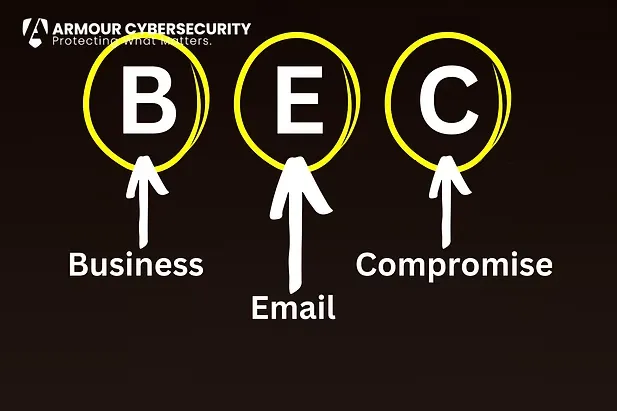
Nothing about it felt unusual, not until weeks later, when the real supplier reached out asking why they hadn’t received their funds. By then, $145,000 had already been wired to a criminal mule account and was long gone. The email hadn’t come from the supplier at all. It was a textbook case of Business Email Compromise, a threat now so common and so sophisticated that many SMBs across Canada, the U.S., and LATAM are losing money faster than they can react.
What makes BEC so insidious is its silence. There are no malicious links, no viruses, no flashing red flags. It slips into your workflow by impersonating the very relationships your business depends on.
Why SMBs Are Feeling the Impact Most
BEC is rising faster than almost any other cybercrime, and SMBs are its preferred targets. The reasons are structural as much as technological. Most small and mid-sized companies run on trust-based finance processes: invoices are expected, vendor relationships are stable, and payment cycles follow predictable rhythms. Attackers know this, and they study it.
Compounding the issue is that Microsoft 365 provides baseline protection, but anti-impersonation and advanced anti-phishing controls aren’t fully enabled by default and many SMBs never tune them. Without advanced configuration, SMBs are exposed to impersonation, spoofing, and subtle mailbox takeovers that often go unnoticed until damage is done. Meanwhile, many vendors, especially smaller ones, lack DMARC or other authentication standards, making their domains easy to spoof.
In regions like LATAM, where payment fraud (“fraude transferencia”) is especially prevalent, companies are managing a high volume of international transactions, often with teams stretched thin. The combination of busy inboxes, repetitive workflows, and trusting relationships creates an environment in which a single convincing message can override years of careful financial management.
How Invoice Fraud Quietly Unfolds
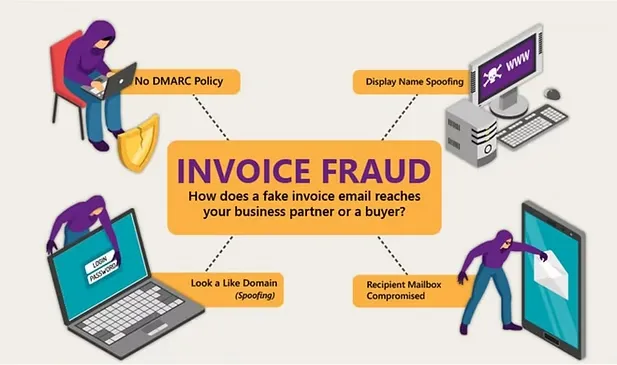
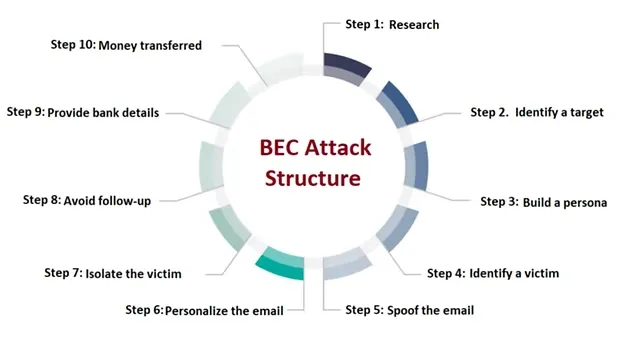
The anatomy of an invoice-fraud BEC incident is disturbingly methodical. Attackers begin with reconnaissance — quietly reviewing social media, public org charts, and vendor websites. They learn billing cycles, invoice formats, and internal hierarchies. From there, they either spoof a domain lacking DMARC or gain unauthorized access to a mailbox. Once inside, they create forwarding rules or hide malicious activity deep within audit logs that many SMBs never review.
Next comes the craft. Attackers replicate invoice templates, copywriting styles, and insert urgent but believable language. They mimic the rhythm of a real supplier: an overdue notice, a last-minute banking update, a polite reminder that the CFO has already been informed. These messages are rarely sloppy. They are polished, deliberate, and designed to bypass both technology and intuition.
By the time a payment is redirected, the victim has no reason to suspect foul play. The fraud sits quietly in plain sight, and the realization only comes when the real vendor calls, or when financial reconciliation reveals an unexplainable gap.
The Hidden Weak Points Inside Microsoft 365
For many SMBs, Microsoft 365 is the beating heart of communication, yet its default configuration leaves financial workflows exposed. Attackers routinely exploit the absence of enforced DMARC/DKIM, weak impersonation detection, and insufficient mailbox auditing. A compromised mailbox might contain subtle forwarding rules sending copies of vendor conversations to an attacker — a tactic many organizations discover only after funds have disappeared.
Conditional access, MFA enforcement, and login anomaly detection are powerful tools, but only when configured intentionally. Most SMB environments simply aren’t hardened, not because companies don’t care, but because they don’t realize how vulnerable these configurations truly are until it’s too late.
The Real Damage Extends Far Beyond the Money
The financial loss itself is painful, but the secondary effects often disrupt a business even more. Vendors may halt shipments, accounting teams must unravel reconciliation discrepancies, and leadership faces uncomfortable conversations with partners, auditors, and teams responsible for soc compliance. The emotional burden on employees — especially those tricked into processing the payment — is significant. Some begin second-guessing routine tasks, slowing operations and eroding confidence across departments.
A single fraudulent payment can ripple outward in ways that challenge both morale and momentum.
Where Armour Cybersecurity Changes the Story
Armour Cybersecurity was built around a simple premise: SMBs deserve access to the same level of protection that large enterprises rely on, without the complexity or cost barrier. Our approach focuses specifically on the vulnerabilities that make invoice fraud possible — and we address them at every stage.
The first layer is strengthening Microsoft 365. Armour configures advanced anti-impersonation rules, enforces secure authentication, deploys conditional access, and enables robust mailbox auditing that reveals even the subtlest intrusions. When attackers attempt to spoof a domain or mimic a vendor, these protections act as an invisible shield, blocking malicious messages before employees ever see them.
Next, we implement DMARC, DKIM, and SPF the right way — not as a one-time setup, but as a monitored, continuously optimized control that prevents attackers from pretending to be you or your suppliers. DMARC is one of the most effective defenses against BEC, yet most SMBs never activate it. We oversee every step to ensure it works flawlessly.
But technology alone is not enough. Armour builds practical finance workflow controls that reinforce trust through verification. Changes to vendor banking details trigger structured approval processes. Payment requests route through defined workflows tied to identity. High-risk invoices require dual authorization, and vendor verification procedures ensure authenticity before money moves. These controls transform the payment process from assumption-based to verification-driven.
Armour also watches what attackers hope you ignore: inbox behavior, while supporting broader security governance and soc compliance initiatives. Real-time alerts flag suspicious forwarding rules, login anomalies, impossible travel logins, and MFA failures. If someone tries to hide inside a mailbox, we know immediately — and we respond.
And because every attack preys on human behavior, Armour provides training that reflects real-world threats: simulations of vendor impersonation, invoice manipulation, and LATAM-style transfer fraud. Finance teams, executives, and frontline staff learn to recognize the exact tactics used against modern SMBs.
Should an incident occur, Armour’s response team mobilizes quickly. We investigate mailboxes, coordinate with banks for potential fund recovery, notify affected partners, and prevent repeat attacks. Our goal is not just to undo damage, but to close the door permanently.
A More Secure Payment Process Is Within Reach
SMBs no longer have the luxury of assuming payment requests are legitimate just because they appear in the inbox. Attackers are too sophisticated, and workflows too vulnerable, to rely on intuition alone. A secure business today requires a secure payment process — one that incorporates identity-based email security, structured verification, continuous auditing, and staff awareness.
Armour Cybersecurity brings all of these elements together in an SMB-friendly framework designed to stop wire fraud before it begins.
How Armour Cybersecurity Can Help You Right Now
Whether your organization operates in Canada, the U.S., or LATAM, if you rely on Microsoft 365 and manage vendor payments, you are already on the radar of BEC attackers. Armour can help you protect your organization through cybersecurity consulting, securing email systems, implementing DMARC, strengthening approval workflows, verifying vendor identities, monitoring inboxes in real time, and training users to recognize sophisticated fraud attempts.
Your business doesn’t need enterprise resources — just the right partner for private security consulting and cybersecurity protection.
Stop Wire Fraud Before It Starts
Armour Cybersecurity specializes in high-impact, accessible security solutions tailored for SMBs facing rising BEC and invoice fraud threats.
👉 Book a consultation today and secure your payment process end-to-end.👉 Visit: ArmourCyberSecurity.com