
Cloud computing has transformed how organizations build, scale, and operate technology. From rapid deployment to elastic scalability and reduced infrastructure costs, the benefits are undeniable. Yet with those benefits comes a persistent source of confusion, and risk: the Shared Responsibility Model.
Many security incidents in the cloud don’t happen because cloud platforms are insecure. They happen because organizations misunderstand who is responsible for securing what. This article breaks down the Shared Responsibility Model in clear, practical terms, explains how responsibilities differ across cloud service models, and shows how organizations can close the security gaps that attackers frequently exploit.
QUICK ANSWER
The Shared Responsibility Model is a cloud security framework that defines which security responsibilities belong to the cloud provider and which remain the responsibility of the customer. While providers secure the underlying cloud infrastructure, customers remain responsible for protecting their identities, configurations, applications, data, and access controls. Misunderstanding these responsibilities is one of the leading causes of cloud security incidents.
KEY TAKEAWAYS
☑ Cloud providers secure the cloud infrastructure, but customers secure their data, identities, applications, and configurations.
☑ Responsibilities differ across IaaS, PaaS, and SaaS environments.
☑ Misconfigurations and weak identity controls remain leading causes of cloud breaches.
☑ Multi-cloud environments increase security complexity and visibility challenges.
☑ Continuous monitoring and cloud security governance are essential for maintaining a strong cloud security posture.
What Is the Shared Responsibility Model?
At its core, the Shared Responsibility Model defines how security and compliance responsibilities are divided between the cloud provider and the customer. Contrary to a common misconception, moving to the cloud does not mean outsourcing all security responsibilities.
Instead, cloud security is a partnership.
Cloud providers are responsible for securing the cloud itself, the physical data centers, hardware, networking, and foundational services. Customers are responsible for securing what they put in the cloud, their data, configurations, identities, and applications, depending on the service model they use.
This distinction may sound straightforward, but in practice it becomes complex, especially as organizations adopt multiple cloud platforms and services simultaneously.
Why the Shared Responsibility Model Matters
Understanding the Shared Responsibility Model is not just an academic exercise. It directly impacts:
- Breach prevention – Misconfigured storage, weak identity controls, and exposed APIs are among the most common causes of cloud breaches.
- Compliance – Regulatory frameworks like ISO 27001, SOC 2, and PCI DSS still apply in the cloud.
- Risk ownership – When something goes wrong, regulators and customers look to you, not the cloud provider.
In short, if you don’t clearly understand your responsibilities, attackers will.
Cloud Security Posture and Shared Responsibility
Understanding responsibilities is only one part of securing cloud environments. Organizations must also maintain a strong cloud security posture by continuously evaluating configurations, identities, permissions, data protection controls, and monitoring capabilities.
A cloud security posture assessment helps organizations identify gaps in their implementation of the Shared Responsibility Model and prioritize remediation efforts before attackers exploit them.
This naturally supports Armour’s Cloud Posture Assessment offering.
Breaking Down Responsibilities by Cloud Service Model
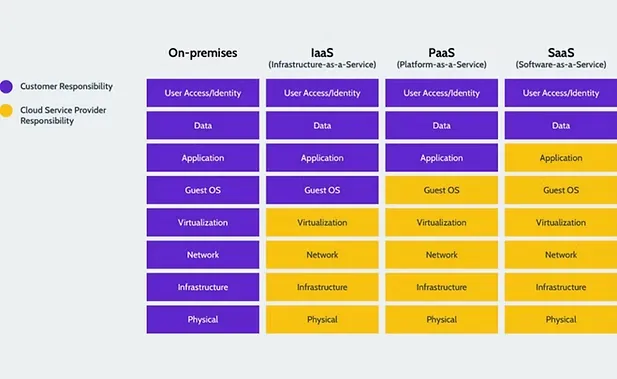
The Shared Responsibility Model changes depending on whether you’re using Infrastructure as a Service (IaaS), Platform as a Service (PaaS), or Software as a Service (SaaS). Let’s explore each.
The Role of Cloud Security Posture Management (CSPM)
As cloud environments grow, manually reviewing configurations becomes increasingly difficult. Cloud Security Posture Management (CSPM) solutions continuously monitor cloud resources, identify security misconfigurations, assess compliance status, and alert security teams to emerging risks.
CSPM helps organizations operationalize the Shared Responsibility Model by providing continuous visibility into customer-controlled security responsibilities.
Infrastructure as a Service (IaaS)
IaaS offers the greatest flexibility, and the greatest security responsibility for customers.
Cloud provider responsibilities typically include:
- Physical data center security
- Hardware and networking
- Underlying virtualization layer (hypervisor)
Customer responsibilities include:
- Operating systems and patching
- Network configurations (firewalls, security groups)
- Identity and access management
- Applications and data security
- Logging, monitoring, and threat detection
In IaaS environments, misconfigured firewalls or unpatched systems are common entry points for attackers. While the cloud provider ensures the infrastructure is secure, how you configure and manage it determines your real-world risk.
Platform as a Service (PaaS)
PaaS shifts more responsibility to the cloud provider, but it doesn’t eliminate customer risk.
Cloud provider responsibilities expand to include:
- Operating system management
- Runtime environments
- Platform patching and availability
Customer responsibilities still include:
- Application security
- Secure coding practices
- Data protection and encryption
- Identity, access, and privilege management
- Configuration of platform security controls
PaaS reduces operational overhead, but insecure application logic, exposed APIs, and weak authentication remain customer-side risks.
Software as a Service (SaaS)
SaaS provides the most abstraction, but it also creates a dangerous illusion that “security is handled.”
Cloud provider responsibilities include:
- Application infrastructure
- Service availability
- Core platform security
Customer responsibilities remain critical:
- User access and permissions
- Identity and authentication controls
- Data classification and governance
- Endpoint security
- Monitoring user activity and anomalies
Many SaaS breaches stem from compromised credentials, excessive permissions, or lack of visibility—areas squarely within the customer’s control.
The Most Common Shared Responsibility Failures
Across industries, the same mistakes appear repeatedly.
One of the most frequent failures is misconfiguration. Storage buckets left public, overly permissive firewall rules, or default security settings can expose sensitive data within minutes of deployment.
Another major risk lies in identity and access management (IAM). Overprivileged users, shared accounts, and lack of multi-factor authentication give attackers easy paths to escalate access once credentials are compromised.
Strong cloud identity security should include:
- Multi-factor authentication (MFA)
- Least-privilege access controls
- Privileged access management (PAM)
- Regular access reviews
- Role-based access controls (RBAC)
Finally, many organizations struggle with visibility and monitoring. Cloud-native logs exist, but without centralized analysis and alerting, security teams often miss early indicators of compromise.
These gaps don’t exist because cloud providers failed, they exist because customers didn’t fully understand or operationalize their responsibilities.
Why Cloud Misconfigurations Cause So Many Breaches
Cloud platforms provide tremendous flexibility, but that flexibility often creates opportunities for mistakes. Common cloud misconfigurations include:
- Publicly exposed storage buckets
- Overly permissive IAM permissions
- Open network security groups
- Unrestricted API access
- Poorly configured backup repositories
These configuration errors frequently expose sensitive data and are among the most common root causes of cloud security incidents. Regular cloud security assessments and automated monitoring help identify these issues before they become breaches.
Shared Responsibility and Compliance
Many organizations mistakenly assume that cloud providers automatically satisfy compliance requirements. While providers maintain compliance certifications for their infrastructure, customers remain responsible for how they manage data, identities, access controls, logging, and retention policies.
Regulations and frameworks such as:
- ISO 27001
- SOC 2
- PCI DSS
- HIPAA
- NIST Cybersecurity Framework
still require organizations to implement and maintain appropriate security controls within their own cloud environments.
Shared Responsibility in a Multi-Cloud World
Most modern organizations don’t rely on a single cloud platform. They operate across multiple public clouds, SaaS providers, and hybrid environments. While each provider follows the same concept of shared responsibility, the details differ.
Security controls, logging formats, identity systems, and configuration models vary widely. This fragmentation increases the likelihood of blind spots, inconsistent policies, and delayed incident response.
Managing shared responsibility effectively in a multi-cloud environment requires unified visibility, consistent governance, and expertise that spans platforms, not just tools.
Turning Shared Responsibility into Shared Advantage
The Shared Responsibility Model doesn’t have to be a weakness. When understood and implemented correctly, it becomes a strategic advantage.
Organizations that clearly define ownership, enforce security baselines, and continuously monitor their cloud environments can move faster and safer than traditional infrastructure ever allowed.
The challenge is that achieving this maturity requires specialized skills, constant attention, and tooling that many internal teams are stretched too thin to maintain alone.
How Armour Cybersecurity Helps Close the Gap
At Armour Cybersecurity, we help organizations bridge the gap between cloud potential and cloud reality.
We work alongside your teams to ensure the customer side of the Shared Responsibility Model is fully covered, across IaaS, PaaS, and SaaS environments. Our approach combines deep cloud expertise with proactive security operations, so nothing falls through the cracks.
Armour Cybersecurity helps organizations:
- Identify and remediate cloud misconfigurations before attackers exploit them
- Strengthen identity and access controls across cloud platforms
- Monitor cloud environments 24/7 for threats and anomalies
- Align cloud security practices with regulatory and compliance requirements
- Gain clear visibility into who is responsible for what, at all times
Rather than relying on assumptions, we help you operationalize shared responsibility into measurable, enforceable security outcomes.
Final Thoughts: Security in the Cloud Is Still Your Responsibility
The cloud changes how security is delivered, but it does not change who is accountable. Understanding the Shared Responsibility Model is foundational—but acting on it is what truly protects your organization.
Cloud providers secure the foundation. You secure what you build on top of it.
With the right partner, that responsibility becomes manageable, measurable, and resilient.
Frequently Asked Questions
What is the Shared Responsibility Model in cloud security?
The Shared Responsibility Model defines how security responsibilities are divided between the cloud provider and the customer. Providers secure the cloud infrastructure, while customers secure their data, identities, applications, and configurations.
Who is responsible for data security in the cloud?
Customers are responsible for protecting their data, controlling access, managing encryption, and implementing appropriate security controls, regardless of the cloud provider used.
Does the Shared Responsibility Model change between IaaS, PaaS, and SaaS?
Yes. Customer responsibilities are greatest in IaaS environments and decrease as more services are managed by the cloud provider in PaaS and SaaS models. However, customers always retain responsibility for identities, permissions, and data protection.
What are the most common cloud security mistakes?
Misconfigured storage, excessive user permissions, weak authentication, lack of monitoring, and misunderstanding the Shared Responsibility Model are among the most common causes of cloud security incidents.
How can organizations improve cloud security?
Organizations should implement strong IAM controls, multi-factor authentication, continuous monitoring, cloud security posture management, regular cloud security assessments, and clearly defined governance processes.
Strengthen Your Cloud Security Posture with Armour
Understanding the Shared Responsibility Model is only the first step. Organizations must continuously validate configurations, strengthen identity controls, monitor cloud activity, and align security practices with compliance requirements.
Armour Cybersecurity helps organizations:
- Assess cloud security posture
- Identify and remediate cloud misconfigurations
- Strengthen identity and access management
- Implement continuous cloud monitoring
- Improve compliance and governance across cloud environments
Whether you’re operating in AWS, Azure, Google Cloud, or a multi-cloud environment, our experts can help you reduce risk and confidently manage your cloud security responsibilities.
Contact Armour Cybersecurity today to take control of your cloud security responsibilities and turn shared responsibility into shared success.